
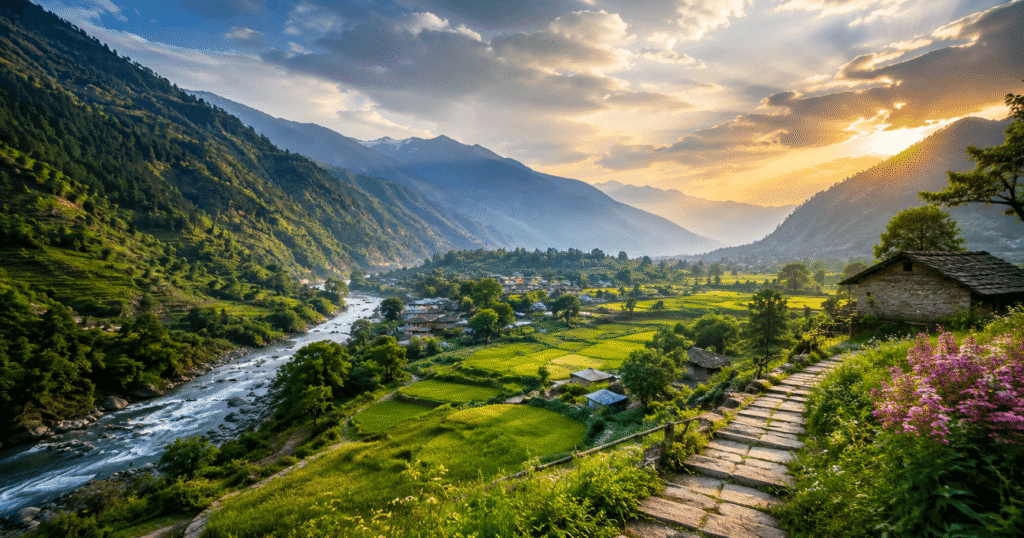
India is the land of surprises and mysticism. You will be awestruck by the diverse range of places that you can explore. Most people follow the cliche path of those already-visited destinations which are swarmed with tourists. India’s most breathtaking destinations are not on any postcard yet. India has 28 states, 8 union territories, and more landscapes than most continents. Yet most travellers queue up for Goa, Rajasthan, and Manali. Meanwhile, entire valleys, rivers, islands, and cliff cities sit empty – waiting for curious people like you. You just need the right guidance and information that will help you explore the hidden gems in India that most people do not know.
Hidden Gems in India You Must Explore
India is not just about famous landmarks, crowded beaches, and popular hill stations. Beyond the usual travel routes, there are countless breathtaking destinations waiting to be discovered. From peaceful mountain villages to untouched islands and ancient towns, the country is full of surprises.
If you love authentic experiences, slow travel, and places that still feel untouched, these hidden gems in India deserve a spot on your travel list.
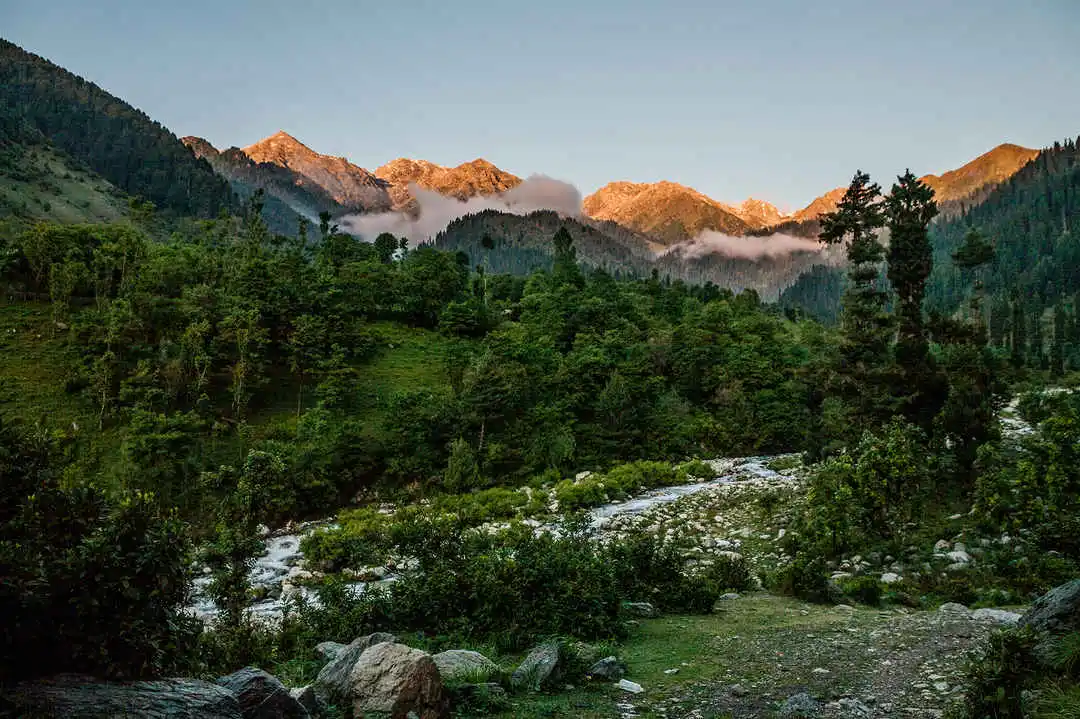
Furthermore, the rise of overtourism is real. Spiti in summer now sees more cars than camels. Rishikesh is louder than a bazaar. So, where do you go when you want India’s soul without the selfie sticks?
We dug deep into travel records, spoke to local guides, and mapped India’s least-visited yet most rewarding destinations.
A Quick Guide to the Hidden Gems in India You Must Explore Before Everyone Else
Most unexplored place in India? Zanskar Valley and Bastar top the list
Best hidden destination for nature lovers? Dzukou Valley, Nagaland
Easiest hidden gem to reach? Gokarna, Karnataka- direct trains available
Most unique cultural experience? Majuli Island, the world’s largest river island
Best for archaeology? Dholavira, Gujarat- a UNESCO World Heritage Site
Most Beautiful Hidden Places in India Right Now
Zanskar Valley- Ladakh, Jammu & Kashmir
Zanskar is arguably the most exotic place in India that remains unexplored by mass tourism. Hemmed in by the Great Himalayas and the Zanskar Range, this valley gets completely cut off by snow for five to six months every year.
- Walk the legendary Chadar Trek- a frozen river crossing that even experienced trekkers consider a once-in-a-lifetime feat
- Visit ancient Buddhist monasteries like Karsha and Phugtal, clinging to cliff edges with no roads in sight
- Experience true digital detox – mobile connectivity is minimal, nights are lit by stars alone
- The Zanskar River gorge rivals anything you’d find in Utah or Patagonia, yet almost no one from outside Ladakh knows it
Majuli Island- Assam, Northeast India
This North Eastern destination will awestruck you with its charming serenity. Majuli is the world’s largest inhabited river island – and one of India’s most unique places to visit. It sits in the middle of the Brahmaputra River and houses the heartland of Vaishnavite culture in Assam.
- Explore the Satras (Neo-Vaishnavite monasteries) that have preserved classical Assamese dance, music, and mask-making for 500 years
- Cycle through paddy fields, tea gardens, and tribal villages where life moves at the pace of the river
- Witness the erosion crisis firsthand — the island loses land every year to flooding, making this a destination with a ticking clock
- Connect with the Mishing and Deori tribes, who live in bamboo stilt houses along the banks
Gandikota- Andhra Pradesh
Very few travellers know that India has its own version of the Grand Canyon. Gandikota, in the Kadapa district of Andhra Pradesh (Southern India), is where the Pennar River has carved a spectacular gorge through the Erramala Hills.
- The medieval Gandikota Fort sits dramatically at the gorge’s edge – combining history with jaw-dropping natural scenery
- Camp overnight in the gorge for one of India’s most surreal sunsets, where red rock turns molten at dusk
- The nearest railway station is Jammalamadugu, making it reachable but still far enough off the beaten track
- Perfect for astrophotography – the dark skies here are exceptional
Dzukou Valley- Nagaland, Northeast India
Dzukou Valley is one of those places that makes you wonder why it isn’t famous worldwide. Sitting at 2,438 metres on the Nagaland-Manipur border, this valley blooms into a carpet of Dzukou lilies every July to September.
- A two-to-three hour trek from Viswema village gets you into the valley – no fancy gear or experience needed
- Camp inside the valley under a canopy of stars and wake up to mist rolling over the ridgeline
- One of the least crowded places to visit in India, even during peak bloom – you might have entire meadows to yourself
- Also accessible from the Manipur side via Mao for a different route experience
Dholavira- Gujarat, West India
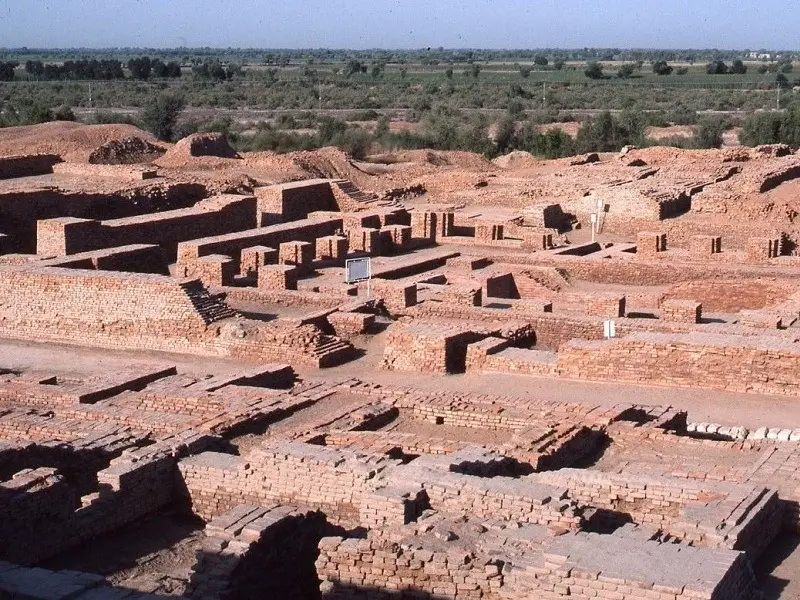
Most travellers who go to Gujarat head to Kutch for the Rann. Very few detour 200 km further to Dholavira – and that’s a mistake. This is one of the five largest Harappan cities ever excavated, and it’s sitting quietly in the desert like a secret the ancient world kept.
- Walk through a city that was meticulously planned 5,000 years ago – with reservoirs, sewage systems, and gateways that boggle modern engineers
- The site museum is compact but deeply informative, with artifacts that paint a vivid picture of urban life in 2500 BCE
- UNESCO declared it a World Heritage Site in 2021, yet tourist footfall remains remarkably low
- Pair it with the Rann of Kutch and the Fossil Park at Akal for a full prehistoric Gujarat circuit
Bastar- Chhattisgarh, Central India
Bastar is one of those rare destinations that offers everything – dense jungles, thundering waterfalls, ancient iron-craft traditions, and tribal markets that have barely changed in centuries. Moreover, it remains almost entirely off the tourist radar for most Indians.
- Chitrakote Falls, the widest waterfall in India, is wider than Niagara – yet most people have never heard of it
- The weekly Bastar tribal haat (market) is a living museum of Gond and Muria culture
- Kanger Valley National Park shelters gaurs, leopards, and some of India’s most spectacular caves
- Bastar Dussehra, one of India’s longest festivals (75 days), is a remarkably undervisited cultural event
Chopta- Uttarakhand, North India
It is also known as the Mini Switzerland of India. While Auli gets crowded every winter and Kedarnath overwhelms in summer, Chopta sits quietly in Kedarnath Wildlife Sanctuary – completely undisturbed. At 2,680 metres, it’s the base for the Tungnath-Chandrashila trek, which is one of the most rewarding short treks in the Himalayas.
- Tungnath is the world’s highest Shiva temple at 3,680 metres – and the trail to it passes through oak and rhododendron forests
- Chandrashila summit (3,979 m) offers 360-degree views of Nanda Devi, Trishul, Kedarnath, and Chaukhamba
- Accessible even for moderately fit travellers – no technical climbing required
- The meadows around Chopta in April are blanketed in red rhododendron – genuinely stunning and far less crowded than Valley of Flowers
Mawlynnong & Dawki- Meghalaya, Northeast India
Meghalaya has started gaining attention, but most visitors still don’t go beyond Shillong and Cherrapunji. Meanwhile, Mawlynnong – Asia’s cleanest village – and the crystal-clear Dawki River remain among India’s most beautiful hidden places.
- Dawki’s Umngot River is so clear that boats appear to float on air – one of the most photographed yet still-serene spots in Northeast India
- The living root bridges of Meghalaya (natural bridges grown from rubber tree roots by the Khasi people) are feats of bio-engineering found nowhere else on Earth
- Mawlynnong’s bamboo dustbins, community composting, and zero-litter culture offer a powerful sustainability lesson
- The sky walk at Mawlynnong gives panoramic views of the Bangladesh plains on a clear day
Gokarna- Karnataka, South India
Gokarna is what Goa used to be before the charter flights arrived. This small temple town on the Karnataka coast balances ancient Hindu pilgrimage culture with some of the most pristine beaches in India – all in one compact, walkable strip.
- Om Beach is shaped exactly like the Om symbol – remarkable from any hilltop vantage point
- Half Moon Beach and Paradise Beach are accessible only by foot or boat – keeping them blessedly crowd-free
- The Mahabaleshwar Temple is one of the seven sacred Mukti Sthalas of South India and makes for a deeply authentic cultural visit
- Gokarna is approachable by train from Goa, Mumbai, or Mangalore – genuinely easy to reach for what it offers
Tawang- Arunachal Pradesh, Far Northeast
Tawang is perhaps the most dramatic of all 10 destinations on this list. Sitting at 3,048 metres in Arunachal Pradesh, it houses Asia’s second-largest Buddhist monastery – and practically no one goes there compared to McLeod Ganj or Spiti.
- Tawang Monastery, built in the 17th century, is a living monastery with over 450 monks – not a tourist spectacle, but a functioning spiritual centre
- The Bumla Pass (4,728 m) near the Indo-China border offers extraordinary high-altitude scenery and historical significance
- The Tawang War Memorial pays tribute to the 1962 war – a sobering yet powerful experience
- Inner Line Permits are required but straightforward to obtain – this single step keeps Tawang beautifully uncrowded
Quick Planning Reference – All 10 Destinations
You should always have a travel plan if you want to explore the uncharted paths. We have provided the quick guide for your convenience below.
| Destination | State | Best For | Crowd Level | Nearest Airport |
|---|---|---|---|---|
| Zanskar Valley | Ladakh | Trekking, Adventure | Very Low | Leh (LEH) |
| Majuli Island | Assam | Culture, Heritage | Low | Jorhat (JRH) |
| Gandikota | Andhra Pradesh | Nature, History | Very Low | Kurnool |
| Dzukou Valley | Nagaland | Trek, Wildflowers | Very Low | Dimapur (DMU) |
| Dholavira | Gujarat | Archaeology, History | Low | Bhuj (BHJ) |
| Bastar | Chhattisgarh | Tribal Culture | Very Low | Jagdalpur (JGB) |
| Chopta | Uttarakhand | Trek, Himalayan Views | Low | Jolly Grant, Dehradun (DED) |
| Mawlynnong & Dawki | Meghalaya | Nature, Village Life | Moderate | Shillong (SHL) |
| Gokarna | Karnataka | Beach, Pilgrimage | Moderate | Goa (GOI) |
| Tawang | Arunachal Pradesh | Buddhist Culture | Low | Tezpur (TEZ) |
Why Explore Hidden Gems in India?
Travel trends are changing. Many travelers now prefer:
- Less crowded destinations
- Local experiences
- Nature-based escapes
- Unique cultural journeys
- Sustainable travel
Popular places often feel busy and commercial. However, hidden destinations offer a chance to connect with local communities, explore untouched landscapes, and create personal travel stories.
These locations also match the growing interest in discovering places mentioned in travel collections like the Hidden Gems of India book, where lesser-known destinations receive the attention they deserve.
How to Choose and Plan for Unexplored Destinations
Planning a journey to these remote spots requires a slightly different approach than normal trips. First, you should always research regional permit requirements, especially for border areas like Arunachal Pradesh. Second, hire local guides to navigate the terrain safely and sustainably.
If you want deeper, structured insights on offbeat travel, we highly recommend checking out the popular hidden gems of India book series available online. Alternatively, if your wanderlust extends past national borders, you can start researching unexplored places outside India like Bhutan’s remote Haa Valley or Kyrgyzstan’s pristine alpine lakes.
Why India’s Hidden Gems Stay Hidden
- Poor road or rail connectivity discourages casual visitors – but rewards the adventurous
- Limited English signage and hospitality infrastructure means most depend on local guides
- State tourism boards often prioritise established circuits over promoting lesser-known routes
- Social media amplifies only photogenic hotspots – leaving non-instagrammable gems invisible
- Language barriers in remote tribal areas further reduce mainstream tourist influx
Unexplored Places Outside India Worth Considering
For Indian travellers who’ve started checking off hidden gems at home, the next frontier is nearby. Specifically, certain destinations outside India offer equally raw, uncrowded experiences without the cost of flying to Europe.
- Georgia (Caucasus): Tbilisi, Kazbegi, and Svaneti offer dramatic mountain scenery, wine culture, and visa-free access for Indians
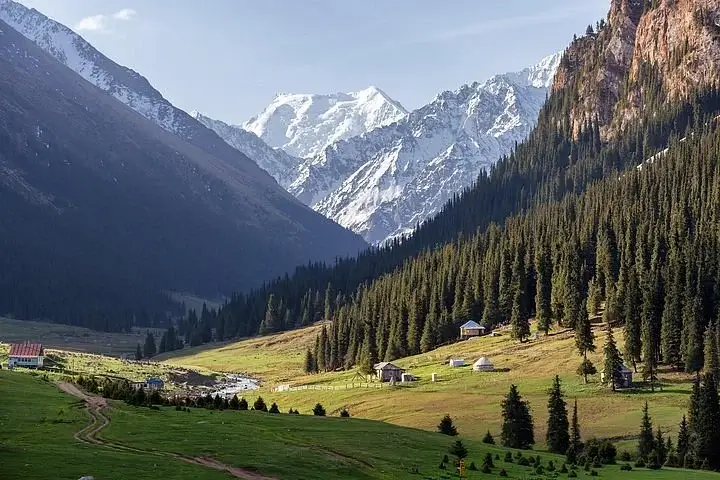
- Kyrgyzstan: Nomadic culture, alpine lakes, and horse treks – all incredibly affordable and nearly free of Indian tourist crowds
- Albania: Riviera beaches, Ottoman old towns, and UNESCO castles at a fraction of the cost of Greece or Italy
- Oman: Wadi Shab, the Empty Quarter edge, and Musandam fjords – a Middle East experience that feels nothing like Dubai
Additionally, if you’re researching the topic in depth, books like Lonely Planet’s India Off Track and the travel writing of William Dalrymple give excellent context to hidden India’s layered history.
The Best Time to Go? Before Everyone Else Does.
These destinations won’t stay hidden forever. Social media, better roads, and growing domestic tourism are slowly bringing them into the spotlight. Go now – when the trails are quiet, the locals are welcoming, and the experience is still genuinely yours.
How to Travel Responsibly to Hidden Destinations
Exploring unknown places comes with responsibility. Follow these simple tips:
- Always carry cash – ATMs are absent in most remote destinations on this list
- Download offline maps (Maps.me or Google Maps offline) before you leave the last town
- For Arunachal Pradesh (Tawang), apply for the Inner Line Permit at least 3 days in advance
- Hire local guides wherever possible – they’re affordable, and your money directly benefits the community
- Travel in the shoulder season (April-May or September-October) for fewer crowds and better rates
- Inform your accommodation about your arrival time – remote places often have no 24-hour reception
Wrapping it up
The hidden gems in India offer more than beautiful views. They provide stories, traditions, and experiences that stay with you forever.
Before these places become crowded travel hotspots, pack your bags and explore the unexplored. The next unforgettable journey might be waiting somewhere you have never heard of.
People Also Ask (FAQs)
Zanskar Valley in Ladakh remains one of the most unexplored places in India. Isolated by snow for nearly six months each year, it has no mass tourism infrastructure and retains extraordinary raw Himalayan character. Bastar in Chhattisgarh is equally untouched – a tribal heartland with waterfalls, forests, and ancient iron-craft traditions that very few outside Chhattisgarh have visited.
The top 5 unique places in India are: (1) Zanskar Valley, Ladakh – for its frozen river trek; (2) Majuli Island, Assam – the world’s largest river island; (3) Dholavira, Gujarat – a Harappan city 5,000 years old; (4) Mawlynnong, Meghalaya – Asia’s cleanest village; and (5) Bastar, Chhattisgarh – for tribal art, widest waterfall, and dense jungles.
Absolutely. Chopta in Uttarakhand, Gokarna in Karnataka, and Gandikota in Andhra Pradesh are all reachable by rail or road without significant difficulty. They simply lack the marketing push of mainstream destinations. Gokarna, in particular, is a direct train ride from Goa and yet feels remarkably peaceful and authentic by comparison.
Several travel books explore offbeat India. Lonely Planet’s India: Off Track is a commonly referenced guide. William Dalrymple’s In Xanadu and City of Djinns bring historical Indian travel writing to life. For community-driven, updated recommendations, travel forums and local tourism board websites often outperform any printed book for real-time hidden gem discoveries.
For Indian travellers seeking unexplored places outside India, Georgia (Caucasus), Kyrgyzstan, Albania, Kosovo, and Oman stand out. These destinations offer visa-friendly access, low travel costs compared to Europe, and landscapes that rival anything on a mainstream bucket list – with barely any Indian tourist presence yet.
For first-time offbeat travellers, the best entry points are Gokarna (Karnataka), Chopta (Uttarakhand), Mawlynnong (Meghalaya), Gandikota (Andhra Pradesh), and Majuli (Assam). These are reachable, relatively infrastructure-supported, and don’t require specialised gear or permits. Afterwards, Dholavira, Dzukou, Bastar, Tawang, and Zanskar await as the more adventurous next steps.