
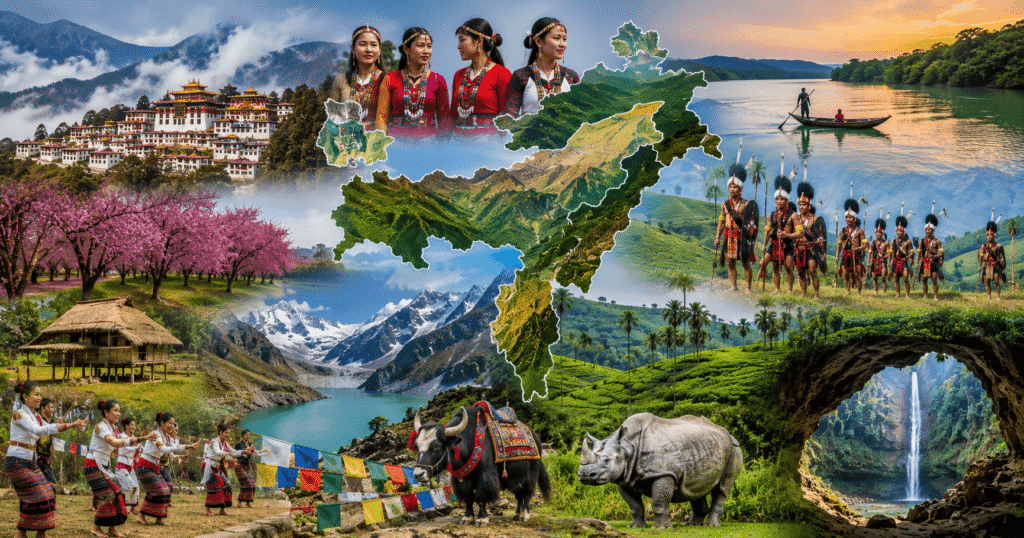
There is a part of India that most travellers have never seen. Wedged between Bangladesh, Bhutan, China, and Myanmar, and connected to the rest of the country by a narrow strip of land barely 22 kilometres wide, Northeast India is a world that operates on its own terms. Eight states. Over 220 indigenous tribal communities. Dozens of distinct languages. The world’s wettest place, the world’s largest river island, Himalayan monasteries older than most nations, and rivers so clear you can read the riverbed from a boat above. You can explore Northeast India if you want to witness a living heaven on earth.
This is not the India of the Taj Mahal and the Golden Triangle. This is wilder, quieter, more complex – and in 2026, it is finally getting the attention it has always deserved.
Explore Northeast India to Experience a Unique Travel Experience
Known as the “Seven Sisters” along with Sikkim, Northeast India is a paradise of mist-covered mountains, untouched forests, vibrant tribes, ancient traditions, breathtaking waterfalls, and peaceful villages. From the mighty Brahmaputra River to the snow-covered peaks of the Himalayas, this region promises an unforgettable travel experience. One of the main reason to explore Northeast India is that you won’t have to spend more money to get a feel of the best International travel destination.
Whether you are an adventure lover, nature enthusiast, culture seeker, or someone looking for a peaceful escape, exploring Northeast India should be on your travel list.
The Eight States: What Each One Offers
Northeast India is often called the “Seven Sisters plus Sikkim” – a reference to the eight states that make up the region. Each has a distinct identity.
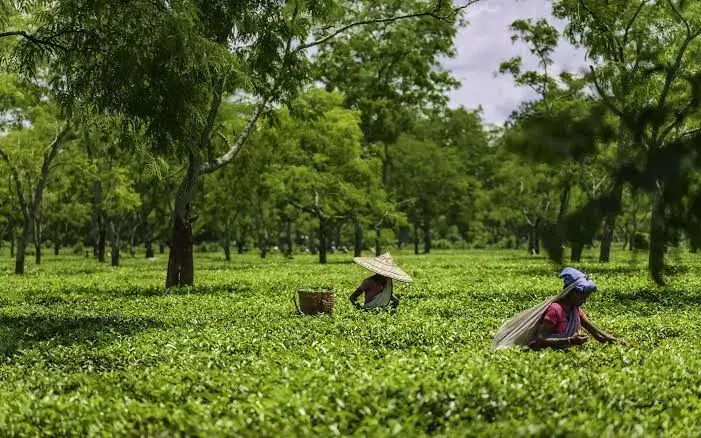
Assam is the gateway to the Northeast, and the easiest entry point for most travellers. It is home to Kaziranga National Park, the world-famous one-horned rhinoceros, the sacred Kamakhya Temple in Guwahati, and Majuli – the world’s largest river island, sitting in the middle of the Brahmaputra. Assam is also the state where you drink the tea that the world calls Indian.
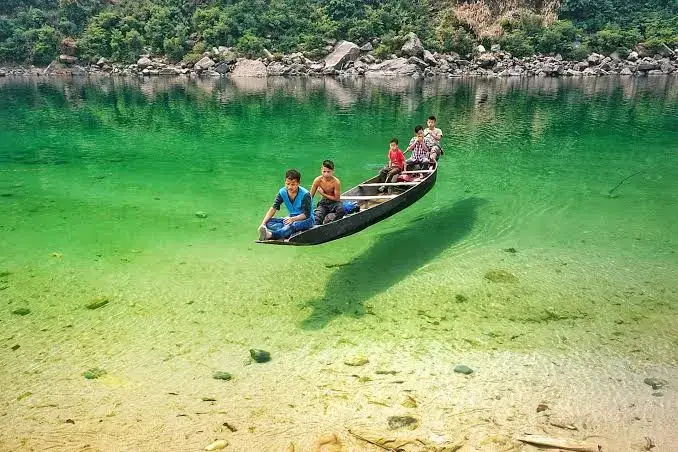
Meghalaya – literally “abode of clouds” – is the most popular destination for first-time visitors to the Northeast. Its highlights include the living root bridges of Nongriat, the crystal-clear waters of the Dawki River, Mawsynram (which holds the record for the world’s highest rainfall), and Mawlynnong, widely regarded as Asia’s cleanest village. Cherrapunji’s waterfalls, caves, and limestone formations add further depth to a state that can occupy a traveller for weeks.
Nagaland is the cultural heart of the Northeast for anyone drawn to tribal traditions. Home to over 16 major Naga tribes, it offers a form of authentic cultural immersion that is genuinely rare. The Hornbill Festival, held in early December in the heritage village of Kisama near Kohima, is one of India’s most extraordinary events – a gathering of all Naga tribes that showcases warrior dances, traditional music, and craftsmanship in a setting that no cultural centre could replicate.
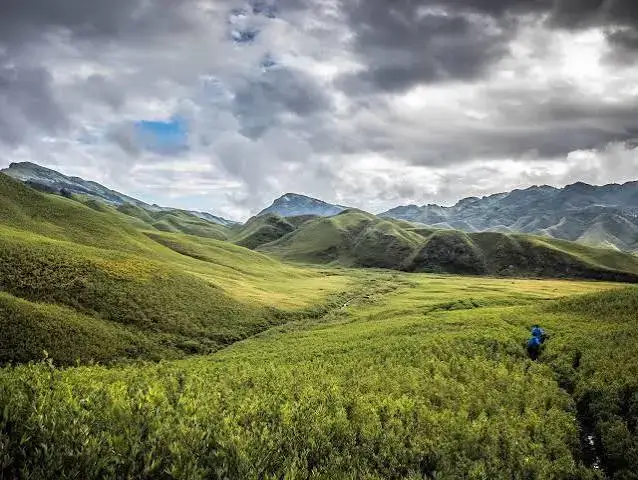
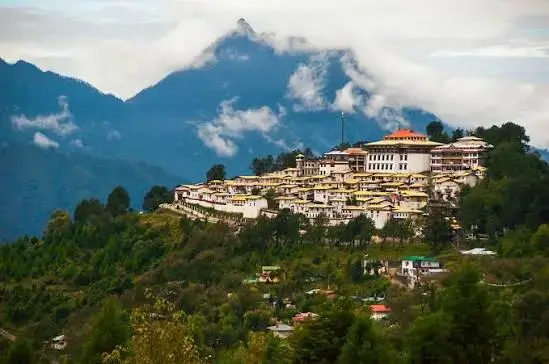
Arunachal Pradesh is India’s largest northeastern state and its most dramatic. The Tawang Monastery, perched at 3,000 metres in the Himalayan peaks, is the largest monastery in India and one of the most significant in the Buddhist world. Ziro Valley – a UNESCO tentative World Heritage site – is home to the Apatani tribe and a landscape of rice paddies and pine-clad hills that rewards slow travel. The state also hosts the Ziro Music Festival each September.
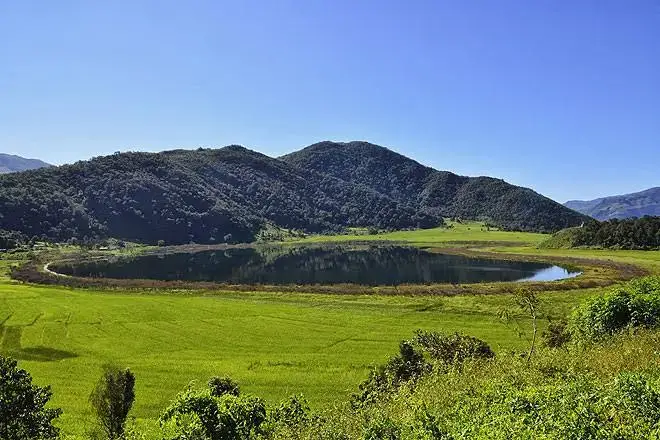
Manipur, accessed via the Imphal Valley, offers a quieter, less-travelled experience. Loktak Lake – India’s largest freshwater lake – floats with unique islands of vegetation called phumdis, some large enough to support villages and wildlife. Manipur’s dance tradition, particularly Manipuri classical dance, is also one of the eight classical dance forms of India.
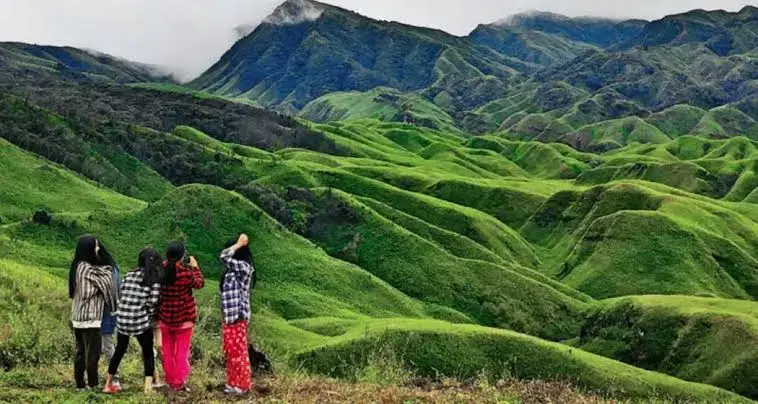
Mizoram is one of India’s most literate states and among its most underexplored. Rolling green hills, a strong choral music culture, and the dramatic Vantawng Falls make it a destination for those seeking authentic, crowd-free travel.
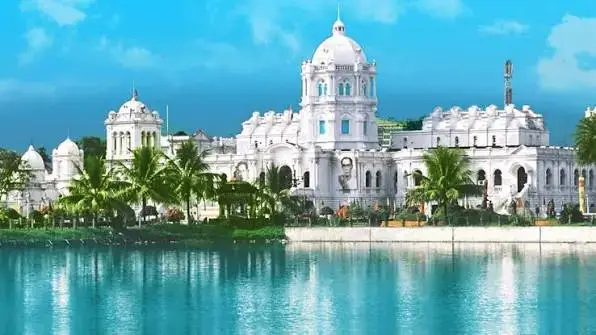
Tripura sits at the edge of the region and offers a compelling mix of royal heritage – the Ujjayanta Palace, now a museum, and the scenic Neermahal water palace – alongside the biodiversity of Sepahijala Wildlife Sanctuary.
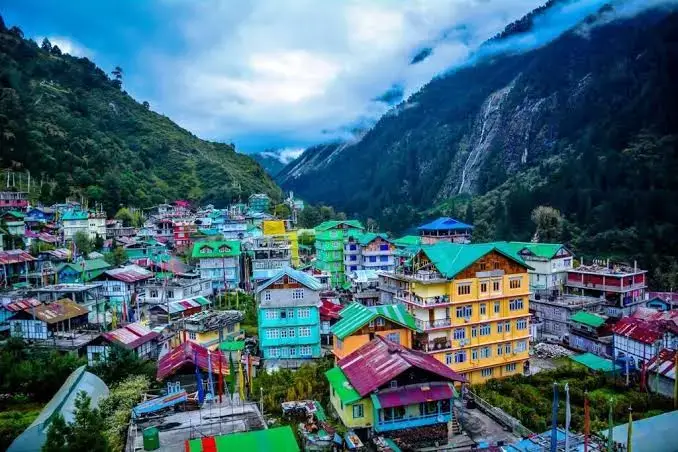
Sikkim, perched in the Eastern Himalayas, is where Buddhist monastery culture meets glacial lakes and rhododendron forests. Gangtok is the starting point for journeys toward Tsomgo Lake, Nathula Pass on the border with Tibet, and Pelling, which offers sweeping views of the Kanchenjunga range.
Best Time to Visit Northeast India
The best time to visit Northeast India is from October to April. This window covers the full range of the region’s highlights:
- October-November: Ideal for Meghalaya, Assam, and Arunachal Pradesh. Clear skies, comfortable temperatures, and the Hornbill Festival in Nagaland in early December.
- December-February: Best for Assam’s wildlife (Kaziranga is fully open), Nagaland’s cultural season, and Meghalaya’s waterfalls. Cold in Tawang and at altitude.
- March-April: Spring blooming season – rhododendrons in Sikkim, festivals across the region, and pleasant temperatures everywhere.
- May-September: Monsoon season. While the monsoon makes the place more beautiful, the weather can cause travel disruptions. Meghalaya receives extraordinary rainfall during this period. Travel is possible but requires flexibility.
Permits: What You Need to Know Before You Book
The permit system is the single most important administrative detail for any Northeast India trip. Get this wrong, and you can find yourself turned back at a state border.
Indians need Inner Line Permits (ILP) for Arunachal Pradesh, Nagaland, and Mizoram. Manipur also requires an ILP. Foreign nationals need a Protected Area Permit (PAP) for these states.
Assam, Meghalaya, Tripura, and Sikkim do not require an ILP for Indian nationals – making them the most accessible states and ideal starting points for first-time visitors to the region.
ILP applications have moved online, making the process considerably easier than it was even five years ago. Permits cost between ₹100–₹500 depending on the state. Apply at least 2–3 days before travel and always carry printed copies – at physical checkpoints, officers may not accept digital copies on your phone.
For foreign nationals, PAP applications go through the Ministry of Home Affairs or registered travel agents. Certain border areas remain restricted even with a PAP.
How to Reach Northeast India
By Air: Guwahati’s Lokpriya Gopinath Bordoloi International Airport is the primary hub for the entire region, with direct flights from Delhi, Mumbai, Kolkata, Bengaluru, and Chennai. The region is more accessible than it has ever been, with more direct flights to Guwahati and Imphal. Imphal (Manipur), Agartala (Tripura), Dibrugarh (Assam), and Bagdogra (for Sikkim access) also have operational airports with growing connectivity.
By Train: The Northeast Frontier Railway connects major towns. Guwahati is well-served by trains from Delhi, Kolkata, and other cities like Varanasi. Beyond Guwahati, trains reach Jorhat (for Majuli), Dibrugarh, and Agartala, but rail connectivity thins out significantly in the hill states.
Within the Region: Road travel is the dominant mode once inside the Northeast. Highways have improved dramatically, but journey times in hilly terrain remain long. Hiring experienced local drivers is strongly recommended – they know the roads, the checkpoints, and the seasonal closures. Flights from Guwahati to smaller cities like Rupsi, Tezu, and Dimapur can cost as little as ₹1,000–₹2,000 one-way, making regional flights a practical option where available.
Top Experiences Not to Miss
The Living Root Bridges of Meghalaya: In the rainforest villages of the Khasi Hills, the indigenous Khasi people have spent centuries training the aerial roots of rubber trees across streams and gorges. The result is a network of living bridges – some over 500 years old, strengthening with age rather than decaying. The double-decker root bridge at Nongriat requires a 3,000-step descent and is among the most photographed natural structures in India.
Kaziranga National Park: Kaziranga National Park is a UNESCO World Heritage Site, home to more than 35 species of mammals, including the largest number of one-horned rhinoceroses, and over 500 bird species. Jeep and elephant safaris run in the park from November to April. An early morning game drive through the tall elephant grass, with the Brahmaputra shimmering in the distance, is one of the finest wildlife experiences in Asia.
Dawki River, Meghalaya: The Umngot River at Dawki runs with a clarity that makes boats appear to float in mid-air. It is one of the most photographed rivers in India for precisely this reason – and one of the most frequently underestimated for how genuinely extraordinary the experience is in person.
Tawang Monastery, Arunachal Pradesh: Founded in the 17th century and home to over 400 monks, Tawang Monastery sits against a backdrop of Himalayan peaks at an altitude that makes the air thin and the silence absolute. The drive up from Guwahati via Bomdila and Sela Pass is itself a journey worth making.
Majuli Island, Assam: The ferry to Majuli Island from Jorhat costs just ₹20 – one of India’s best travel bargains. Once on the island, the world slows to the rhythm of Vaishnavite monasteries (satras), traditional mask-making, and an ecosystem shaped entirely by the Brahmaputra’s seasonal flooding.
The Hornbill Festival, Nagaland: Held every year from December 1-10 at Kisama Heritage Village near Kohima, this is the region’s most celebrated cultural event. Every Naga tribe participates, making it the single best opportunity to witness the full diversity of Naga culture – music, dance, food, craft, and ceremony – in one place.
Budget Guide to Explore Northeast India
Northeast India is one of the most affordable regions in the country for travellers. Accommodation ranges from ₹1,000-₹2,500 per night for a decent hotel or homestay, and food costs ₹200-₹500 per meal at local restaurants. Homestays are a particularly strong choice throughout the region – they keep money directly within local communities and offer access to home-cooked food and local knowledge that no hotel can match.
Budget for permits (₹100-₹500 per state), park entry fees, and safari costs at Kaziranga. A 10-day trip covering two to three states, staying in mid-range homestays and using shared transport where available, can be done comfortably for ₹30,000-₹50,000 per person from Guwahati, excluding flights.
Essential Travel Tips to Explore Northeast India
- Pick one or two states per trip. The North East has so much to offer that one trip would not be enough to see everything. It is best to pick one particular state or maximum two states during one trip.
- Respect tribal customs. Many villages have protocols around photography, dress, and behaviour. Always ask before photographing people or ceremonies.
- Carry cash. ATM availability drops sharply beyond major towns. Carry enough cash for your planned route plus a buffer.
- Pack a raincoat, always. Even outside the monsoon season, rain arrives without warning across much of the Northeast.
- Hire local guides. Not just for navigation – a good local guide unlocks conversations, stories, and access that independent travel simply cannot replicate.
- Mobile connectivity is limited. BSNL has the best coverage in remote areas. Download offline maps before leaving populated centres.
Why 2026 Is the Right Time to Go Explore Northeast India
The region is more accessible than it has ever been. Better road infrastructure, more direct flights, and a growing number of homestays in places that had zero accommodation five years ago mean that permits and infrastructure are no longer the barriers they used to be. You can make this summer vacation travel memorable for life by visiting the Northeastern states.
The government push to market the Northeast as a unified destination – announced this week at the North Eastern Council – signals that visibility and investment are both heading in the right direction. Go now, while the trails are still quiet, the festivals are still intimate, and the living root bridges still belong to the forest.
The Seven Sisters have been waiting a long time to be discovered. In 2026, there is no reason to keep them waiting.