
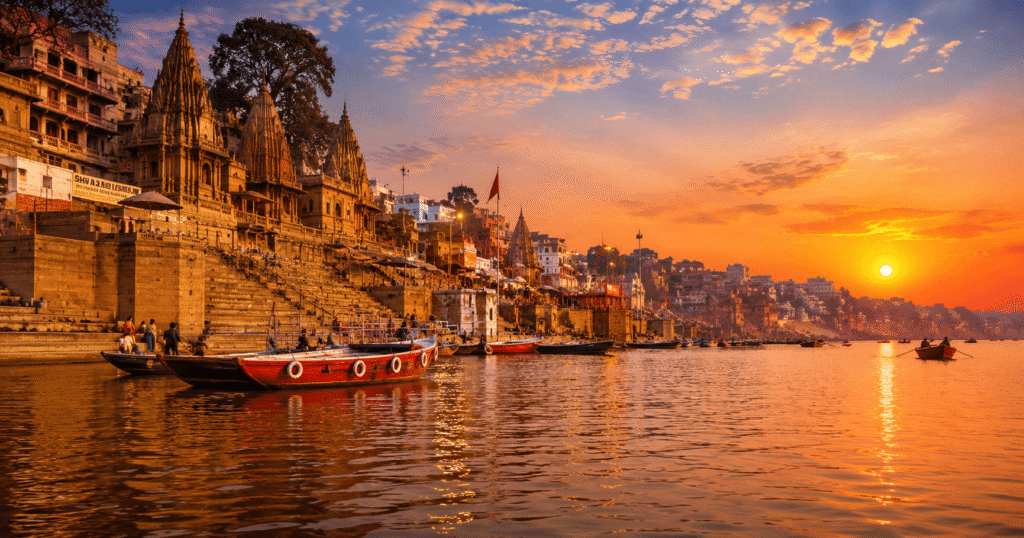
Mark Twain once famously wrote that Benares is older than history, older than tradition, older even than legend, and looks
twice as old as all of them put together. Today, known officially as Varanasi, and historically celebrated as Kashi (the City of
Light), this sacred settlement resting on the crescent-shaped banks of the River Ganges is universally recognized as the most
famous pilgrimage site in India.
Visiting a city like Varanasi can be too much to handle. Varanasi is an old city that is still alive and it can be really confusing for people who are visiting Varanasi for the first time and for people who travel a lot. Varanasi is a city that needs to be explored in a way. This Varanasi Pilgrimage travel guide for Varanasi has information that we learned from our experiences in Varanasi and from talking to people who live in Varanasi. We want to help you have a trip to Varanasi and make sure that you are respectful of the city of Varanasi and its people. We also want to help you have a trip to Varanasi and for your journey, to Varanasi to be life changing.
Varanasi Pilgrimage Travel Guide: What Makes it the Most Sacred?
Of all the pilgrimage sites in India, Varanasi stands in a category entirely its own. Known by three names – Varanasi, Kashi, and Banaras – this ancient city on the western bank of the River Ganga in Uttar Pradesh is widely regarded as the spiritual capital of India. Historians and archaeologists estimate it to be one of the oldest continuously inhabited cities in the world, with human settlement stretching back over 3,000 years.
For Hindus, Varanasi is not simply a destination. It is the earthly abode of Lord Shiva himself. According to Hindu scripture, Varanasi is the city where Shiva settled after his cosmic wandering, making it the one place on earth where the divine is most directly accessible. It is one of the seven Moksha-dayini cities – sacred places believed to grant liberation from the cycle of rebirth (moksha) to those who die within its boundaries.
Every year, millions of pilgrims, spiritual seekers, and curious travelers make the journey to Varanasi. And once you’ve been, it’s easy to understand why.
The Kashi Vishwanath Temple: Heart of the Varanasi Pilgrimage
No Varanasi pilgrimage is complete without a visit to the Kashi Vishwanath Temple, the holiest Hindu temple in the city and one of the twelve sacred Jyotirlingas of Lord Shiva found across India. Jyotirlingas are believed to be manifestations of Shiva as an infinite column of cosmic light – and the one at Kashi Vishwanath is considered among the most powerful.
The temple has a layered and turbulent history. The original structure is believed to have stood on this site for millennia, though it was destroyed and rebuilt multiple times over the centuries. The current temple was reconstructed in 1780 by Maharani Ahilyabai Holkar, the visionary Maratha queen of Indore, and remains the structure that pilgrims visit today. Its iconic gold-plated spires – funded by approximately 800–1,000 kg of gold donated by Maharaja Ranjit Singh of Punjab – shimmer above the ancient roofline of the old city, visible from the ghats below.
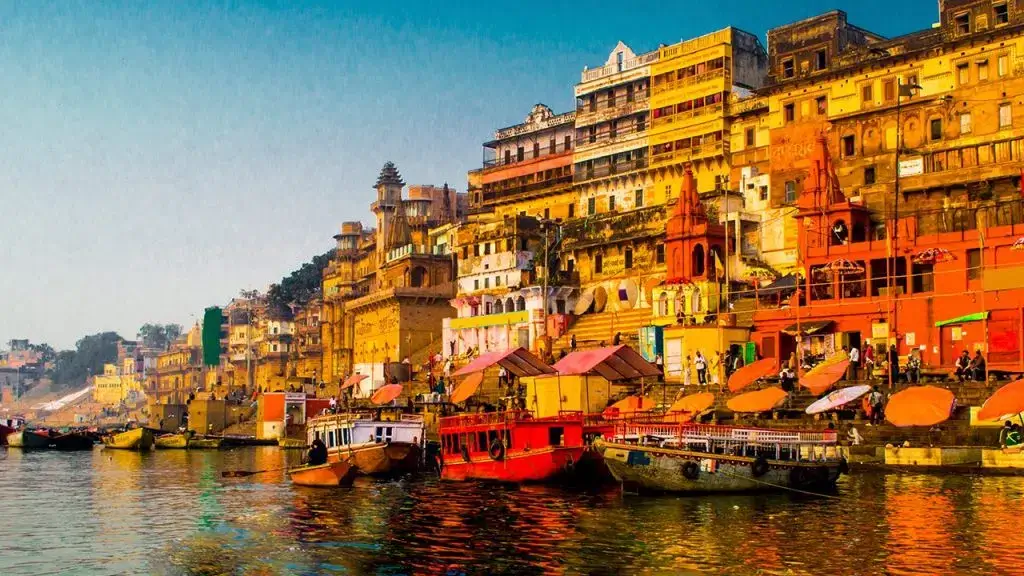
In 2021, the Kashi Vishwanath Corridor was inaugurated, a landmark ₹800 crore redevelopment project that transformed the area surrounding the temple. The corridor now creates a direct, spacious path from the temple to the Ganga ghats – a connection that had been severed for centuries. The result is a dramatically improved experience for the millions of pilgrims who come to perform darshan (sacred viewing) and then descend to the river for a holy dip.
Temple timings: The temple opens at 2:30 AM for the Mangala Aarti and closes at 11:00 PM. The main darshan timings are 4:00 AM–11:00 AM and 12:00 PM-7:00 PM. Arrive early to avoid the longest queues.
Entry: Free for devotees. Cameras and mobile phones are not permitted inside the main sanctum. Valid ID is required for entry.
The Sacred Ghats of Varanasi: A Pilgrim’s Map
Varanasi is home to 84 ghats – stone-stepped riverbanks descending to the Ganga – each with its own history, legend, and ritual purpose. Walking the ghats is an experience that no other pilgrimage destination in India replicates.
Dashashwamedh Ghat
The most famous ghat in Varanasi and the spiritual centerpiece of the city. Every evening at sunset, seven priests perform the Ganga Aarti here – a grand ritual of synchronized lamp offerings, chanting, and conch-shell calls that draws thousands of pilgrims and visitors every single night, without exception. To watch it from a boat on the river, positioned directly in front of the ceremony, is one of the most deeply atmospheric experiences available anywhere in India. Arrive at least 45 minutes before sunset to secure a good spot, whether on the ghat steps or on the water.
Manikarnika Ghat
One of the most sacred – and sobering – places in all of Varanasi. Manikarnika is the primary cremation ghat, where funeral pyres burn continuously, 24 hours a day, every day of the year. Hindus believe that being cremated at Manikarnika ensures moksha, liberation from the cycle of rebirth. According to legend, Lord Shiva himself whispers the Taraka Mantra into the ear of every soul who dies in Kashi, granting them liberation. It is a place of profound faith and raw human reality — approach it with quiet respect.
Assi Ghat
Located at the southern end of the ghat circuit, Assi Ghat is the starting point for the Subah-e-Banaras – a morning gathering at 5:30 AM that features classical music and Vedic chanting as the sun rises over the river. It is also the most popular departure point for dawn boat rides, widely considered the best way to experience the Ganga and the waking city simultaneously.
Harishchandra Ghat
The second cremation ghat, older than Manikarnika and named after the legendary king Harishchandra, celebrated in Hindu tradition as the embodiment of truth and integrity. Quieter than Manikarnika, this ghat carries an equally powerful spiritual weight.
Sarnath: The Buddhist Pilgrimage Site Just 10 km Away
Varanasi’s spiritual significance extends beyond Hinduism. Just 10 km from the city lies Sarnath, one of the most important Buddhist pilgrimage sites in the world. It was here that Gautama Buddha delivered his first sermon after attaining enlightenment at Bodh Gaya – an event known as the Dhammacakkappavattana Sutta, or “Setting the Wheel of Dharma in Motion.”
Sarnath’s Dhamek Stupa, dating to 500 CE, marks the exact spot of that first teaching. The site also houses the Sarnath Archaeological Museum, home to the original Lion Capital of Ashoka — the national emblem of India. A half-day visit to Sarnath pairs naturally with a Varanasi pilgrimage itinerary and gives the trip a genuinely multi-faith spiritual depth.
Best Time to Visit Varanasi for a Pilgrimage
October to March is the ideal window for a Varanasi pilgrimage. Temperatures are pleasant (10–25°C), the river is calm, and the ghats are accessible. The shoulder months of October and November are particularly special: Dev Deepawali, celebrated 15 days after Diwali, sees the ghats illuminated by millions of diyas in a breathtaking display that draws pilgrims and travelers from across the country.
April to June brings intense heat (35–45°C). The city is significantly less crowded, and early morning and evening visits are manageable, but midday is best spent indoors.
July to October is the monsoon season. The Ganga swells dramatically, some ghats may flood, and the Ganga Aarti is occasionally relocated from the riverbank to nearby courtyards. It is the least recommended period for first-time pilgrims.
How to Reach Varanasi?
Varanasi is well-connected to the rest of India across all modes of transport. It is one of the most perfectly connected travel destinations in the world.
- By Air: Lal Bahadur Shastri International Airport (VNS) is approximately 26 km from the city center. Direct flights are available from Delhi, Mumbai, Bengaluru, Kolkata, and several other major Indian cities.
- By Train: Varanasi Junction (BSB) is the main railway station, located about 5 km from the ghats, with excellent connectivity across the country. Kashi Station and Manduadih (now Banaras) Station offer additional options. Pre-booking trains is strongly recommended, especially during peak pilgrimage season.
- By Road: Varanasi is connected to Prayagraj (120 km), Lucknow (300 km), and Ayodhya (200 km) by national highway. Many pilgrims combine Varanasi with Prayagraj (Triveni Sangam) and Ayodhya on an extended Uttar Pradesh spiritual circuit.
Within the city: The lanes (galis) of the old city leading to the ghats are too narrow for vehicles. Auto-rickshaws can get you close, but the final approach to the ghats and temples is always on foot. Wear comfortable, slip-on footwear – you’ll be removing shoes at every temple.
Where to Stay in Varanasi?
Accommodation in Varanasi ranges from basic guesthouses in the old city to boutique heritage hotels with Ganga views:
- Budget: Guesthouses in the gali network around Assi Ghat and Dashashwamedh offer clean, affordable rooms and immediate access to the river. Expect to pay ₹500–₹1,500/night.
- Mid-range: Several well-rated heritage hotels in the old city area sit within 10–15 minutes’ walk of the ghats, starting from ₹2,500/night.
- Premium: Riverside hotels and heritage havelis with Ganga-view rooms and rooftop restaurants offer a more comfortable experience, from ₹5,000/night upward.
Staying close to the ghats is always the right choice – the city rewards early risers, and being able to walk to the river at 5:30 AM without booking a cab makes a real difference.
Practical Tips for Your Varanasi Pilgrimage
- Dress modestly. Shoulders and knees must be covered when entering the Kashi Vishwanath Temple and most other religious sites. Lightweight cotton kurtas are ideal for the warm months.
- Leave valuables at the hotel. The lanes around the temple are narrow and crowded. Carry only what you need for the day.
- Carry cash. Small stalls, boatmen, and flower sellers around the ghats work almost exclusively in cash. ATMs are available in the city but less so near the old ghats.
- Respect the cremation ghats. Photography at Manikarnika and Harishchandra Ghats is strictly prohibited. Maintain a quiet, respectful presence.
- Book boat rides in advance during peak season. Dawn boat rides on the Ganga from Assi Ghat (₹400–₹600 per person for a private boat) are best arranged the evening before during busy periods.
- Watch for scams. Touts near the ghats may claim that the Kashi Vishwanath Temple is “closed for cleaning” and try to lead you to a different temple. The temple is rarely closed during advertised timings – verify at the official entrance.
Why Varanasi Belongs on Every Pilgrim’s Map
Varanasi is not a comfortable destination in the conventional sense. It is crowded, loud, ancient, and entirely unconcerned with impressing you. The lanes are narrow, the ghats are shared by the living and the dead, and the city operates on a spiritual logic that takes time to understand.
But that is precisely why it is irreplaceable. No other pilgrimage site in India confronts you so directly with questions about faith, mortality, and the meaning of devotion. Whether you come as a devout Hindu seeking moksha, a Buddhist following the trail of the Buddha to Sarnath, or a curious traveler drawn by the photographs of lamps on the river – Varanasi will meet you where you are.
Plan carefully. Arrive with patience. And let the city do the rest.
Final Reflections: Embracing the Chaos and the Calm
As you sit quietly on a boat at twilight, watching the ancient smoke rise into the starry sky while hymns float over the water,
you suddenly realize why this city has remained an eternal beacon for seekers across centuries. This Varanasi Pilgrimage Travel Guide covers all the aspects that you need for a successful escape to this holy land.
By executing your trip with an organized roadmap, respecting the deeply rooted local traditions, and opening yourself up to the rhythm of the city, your journey to this unparalleled famous pilgrimage site in India will undoubtedly leave an indelible mark on your soul long after the dust of Kashi has been washed from your shoes.