
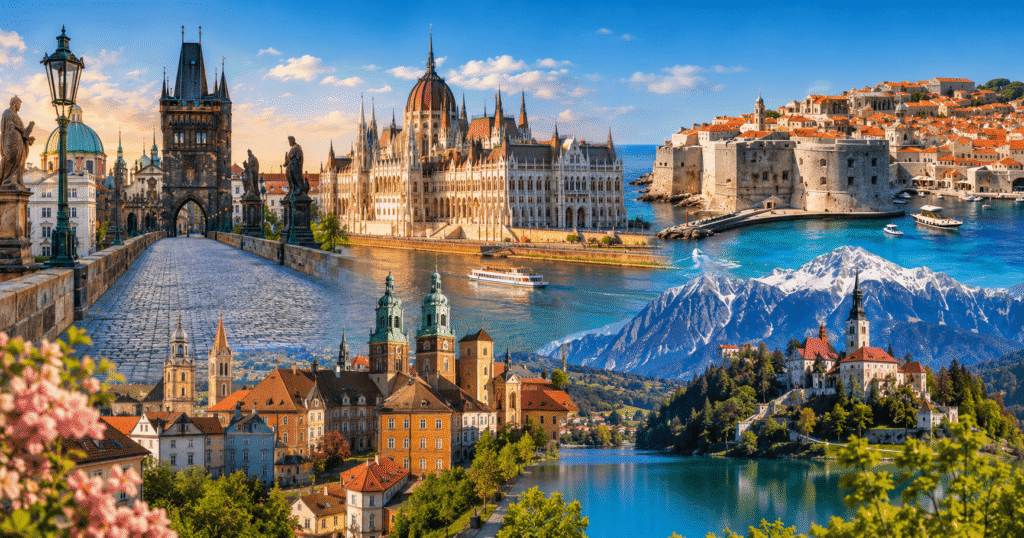
Do you know that Prague is 50% cheaper than Paris? Budapest costs less per day than a New York brunch. This is why it is no secret that many travelers around the world are now flocking to the new holiday destinations in Europe: its Eastern regions. The US flight searches to Eastern Europe have also surged up to 180%. We have provided a detailed guide to Eastern Europe for US travelers. You will enjoy the best of your time in those unexplored wonders of the world.
Eastern Europe for US Travelers: A Trip Everyone Should Take
For many US travelers, Europe often means iconic destinations like Paris, Rome, London, or Barcelona. However, Eastern Europe offers a completely different kind of adventure – one filled with medieval towns, breathtaking landscapes, rich traditions, incredible food, and unforgettable experiences at a more affordable price. Eastern Europe for US Travelers is like a goldmine of untouched beauty.
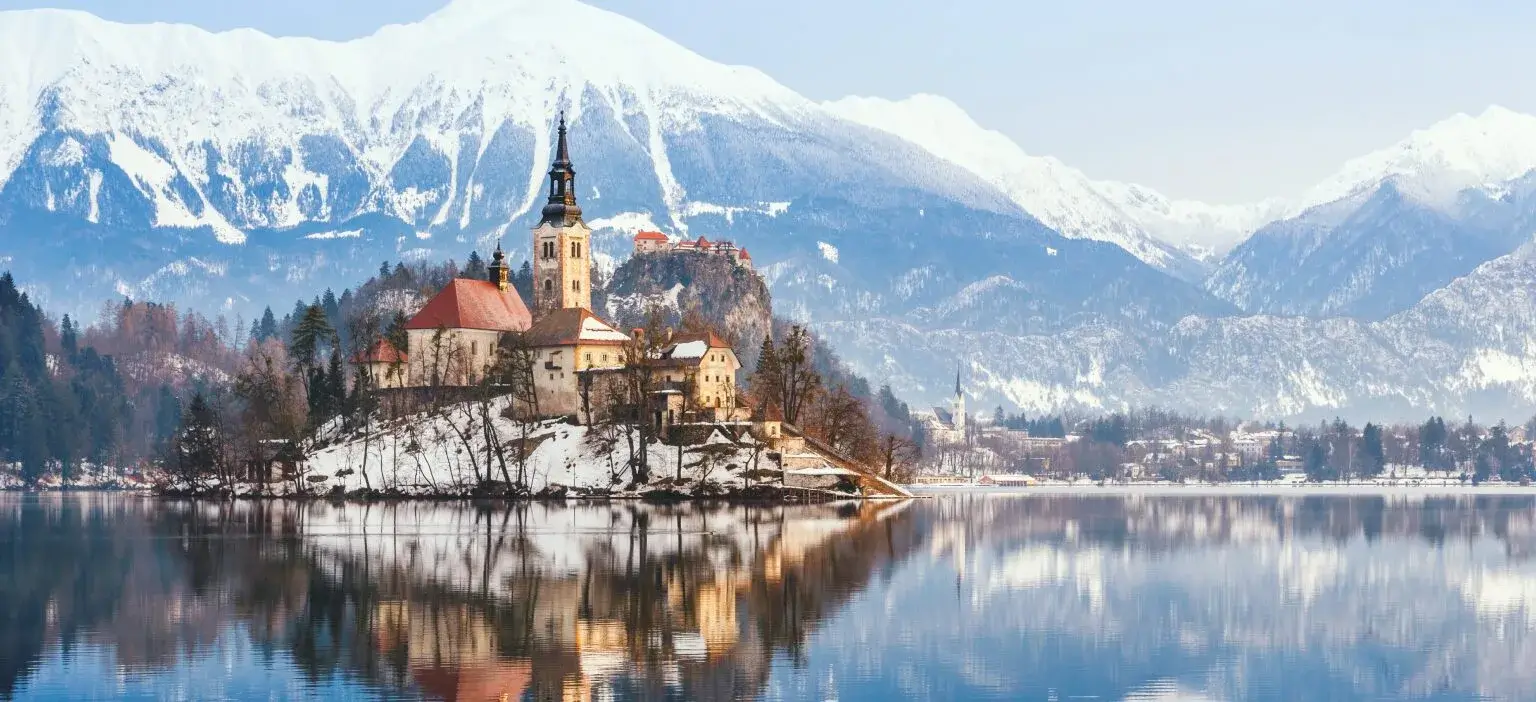
From the fairytale streets of Prague to the stunning coastlines of Croatia and the cultural treasures of Hungary, Eastern Europe is becoming one of the most exciting regions for American travelers looking for authenticity, history, and value.
Why Eastern Europe Is 2026’s Smartest Travel Decision for Americans
This isn’t a niche trend anymore. The data from KAYAK, Skyscanner, and Expedia all point the same direction: US travelers are discovering that Eastern Europe offers Western-quality experiences at a fraction of the price – and 2026 is the year it goes mainstream.
Explosive Search Growth
US flight searches to Eastern Europe surged dramatically heading into 2026. The region is no longer under-the-radar – but it’s not yet overcrowded either. That sweet spot won’t last forever.
Czech Republic +180% · Bulgaria +140% · Hungary +90%
Dramatically Lower Costs
A mid-range day in Kraków or Budapest costs $80-$120 all-in – versus $180–$250 in Paris or Amsterdam. Hotel costs are 40-50% lower than comparable Western European cities for equivalent quality.
Save 40–50% vs. Western Europe
Better Flight Access
Airlines are opening more nonstop routes from the US to Eastern European cities. International airfares are also down ~10% in 2026, making the long-haul cost more manageable than it’s been in years.
Airfares down ~10% in 2026
UNESCO Quality Without the Crush
Prague, Budapest, and Kraków all have UNESCO World Heritage sites, extraordinary architecture, and world-class restaurant scenes – with a fraction of the tourist density of Rome or Barcelona.
World Heritage Sites · Lower Crowds
Train travel between Eastern European capitals is easy and affordable. Prague to Budapest costs ~$25 EU, and the journey itself is scenic. Multi-country trips are genuinely practical.
City-to-city trains: $25–$55
Western Europe Fatigue Is Real
US travelers are tired of $300/night Paris hotels and shoulder-to-shoulder crowds in Rome. Eastern Europe offers the same cultural depth, better value, and the feeling of genuine discovery.
New boutique hotels opening across the region
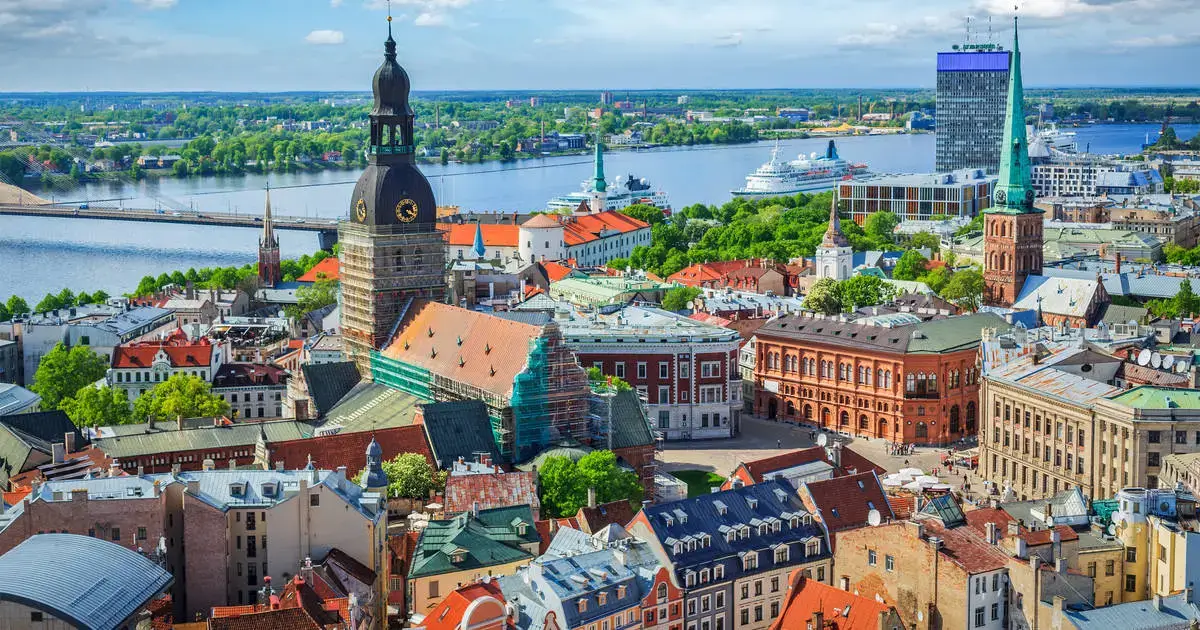
The Best Eastern European Cities for US Budget Travelers in 2026
Every city below offers something Western Europe charges two to three times more for. Here’s the honest breakdown of what each costs, what you’ll see, and who each suits best.
Prague – The Most Beautiful Capital in Central Europe
It is the capital of the Czech Republic. 30-50% cheaper than Western European capitals. Still a UNESCO wonder. Average travelers can roam with $45–70 per day, mid-range. This destinations has seen an ↑ 180% US Search.
Prague leads the Eastern Europe surge for good reason. Its Gothic and Baroque cityscape – medieval bridges, fairy-tale spires, cobblestoned lanes – is arguably the most photogenic in Europe. The Old Town Square, Charles Bridge, and Prague Castle are extraordinary without requiring a single paid entry. And the city’s food and beer scene has quietly evolved into something world-class while staying affordable: a full Czech dinner with beer costs what a coffee costs in Copenhagen.
The main caveat: Prague’s popularity has pushed costs slightly higher than its Eastern European peers. Budget travelers will spend $45-70/day; mid-range travelers $80-120. Stay in Vinohrady or Žižkov neighborhoods for better value and a more local atmosphere than the Old Town tourist corridor.
Prague Castle
Charles Bridge (at dawn)
Old Town Square
Local pivnice (pub) dinner
Vinohrady neighborhood
Budapest – Thermal Baths, Grand Architecture & Great Value
40-50% cheaper than Vienna. Arguably more beautiful.
Budapest is the city that consistently surprises first-time visitors. Split across the Danube into hilly Buda and flat Pest, it has a scale and grandeur that rivals Paris – at a fraction of the cost. The thermal bath culture is unlike anywhere else in Europe: Széchenyi and Gellért baths are 19th-century architectural marvels where you can spend three hours for $20. The ruin bars of the Jewish Quarter are a design experience in their own right.
Hotel costs sit 40-50% below Vienna for comparable quality. A three-course dinner at a solid local restaurant runs $15–22. The metro system is fast, cheap, and easy to navigate. Budapest works for every type of traveler – couples, solo explorers, culture seekers, and food enthusiasts.
- Széchenyi Thermal Bath
- Hungarian Parliament
- Chain Bridge at night
- Ruin bars, Jewish Quarter
- Buda Castle District
Most affordable of the big three. Exceptional historical depth.
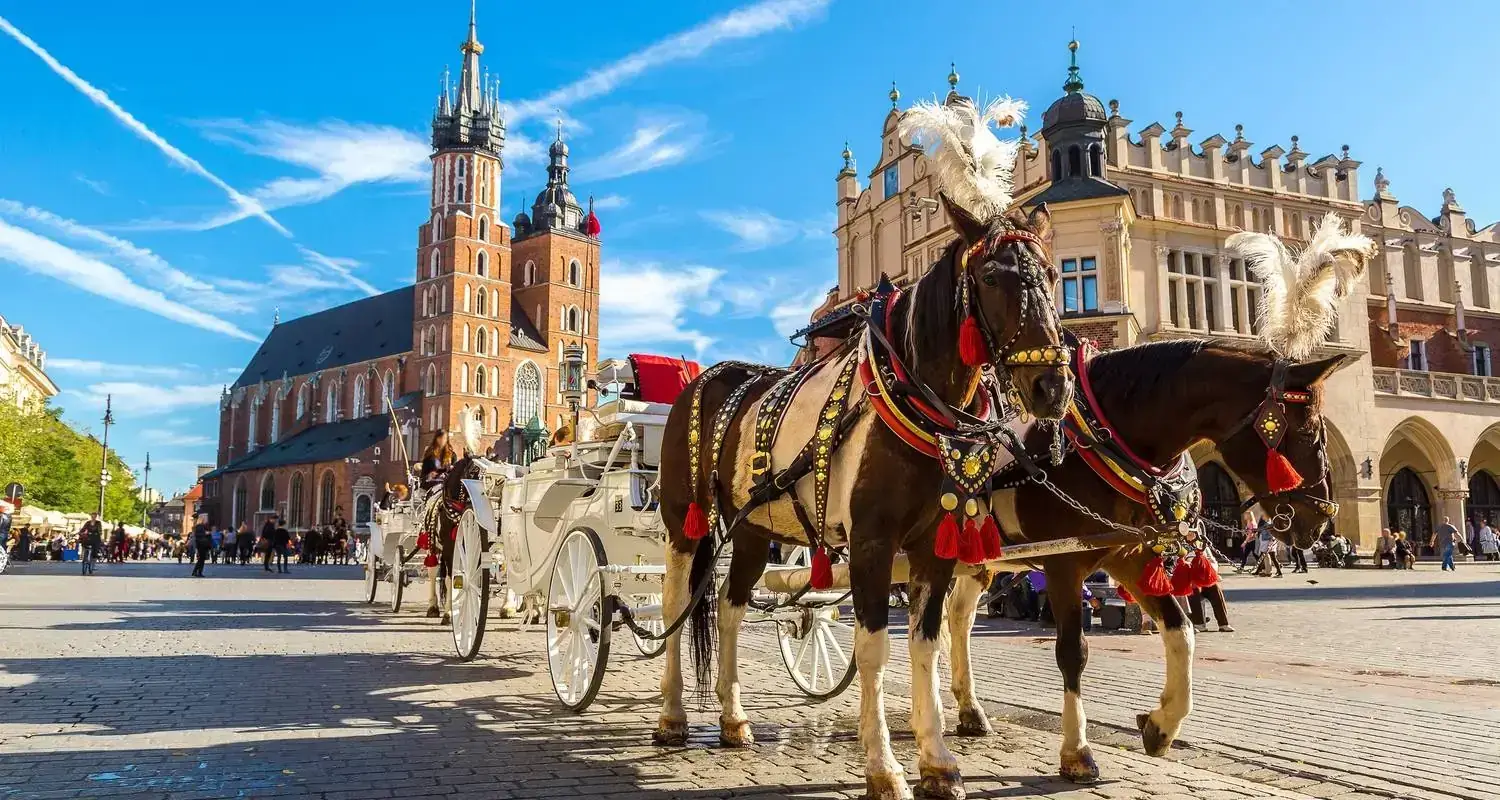
Kraków is consistently one of the cheapest cities in Europe for accommodation, food, and transport – while offering one of the continent’s most intact medieval city centers. The Rynek Główny (Main Market Square) is the largest medieval market square in Europe and serves as the beating heart of the city. The Kazimierz Jewish Quarter has become one of Central Europe’s most creative neighborhoods, with excellent restaurants, galleries, and bars. Wawel Castle sits above the Vistula with commanding views and rich history.
Poland’s currency (the złoty) stretches US dollars further than almost anywhere else in Europe. A milk bar lunch – the traditional Polish self-service cafeteria – costs $3-5 and delivers some of the best home cooking you’ll eat on the trip. Kraków is also the essential base for the Auschwitz-Birkenau memorial visit, one of the most important historical sites in Europe.
- Wawel Castle & Cathedral
- Rynek Główny (Main Square)
- Kazimierz Jewish Quarter
- Milk bar lunch (bar mleczny)
- Day trip: Auschwitz Memorial
Sofia – Europe’s Most Underrated Capital
Deepest value in the region. Emerging fast.
Sofia is the Eastern European destination that most rewards travelers willing to go slightly off the well-trodden path. It’s genuinely affordable at every level – excellent hostel dorms run $12–18, boutique hotel rooms $40-65, and a restaurant meal with wine rarely exceeds $15. The Alexander Nevsky Cathedral is one of the most stunning Orthodox cathedrals in the world and costs nothing to enter. The city’s craft beer and natural wine bar scene has quietly exploded in the last three years.
Bulgaria’s mountainous terrain is exceptional for day trips – Vitosha Mountain is accessible directly from the city by metro and tram. The Rila Monastery, a UNESCO site of extraordinary beauty, is two hours by bus. Sofia is the city that most surprises first-time visitors, and the one most likely to make them want to come back.
- Alexander Nevsky Cathedral
- Vitosha Mountain day trip
- Rila Monastery (UNESCO)
- Natural wine bars, Lozenets
- Free walking tour of Sofia
Belgrade – The Cheapest and Most Electrifying City in Eastern Europe
$25–35/day all-in. Extraordinary culture. Zero tourist fatigue.
Belgrade is the city that budget travel writers have been quietly recommending for years. At $25-35/day all-in, it is the cheapest capital city in Europe for a reasonable quality of life – and yet it doesn’t feel cheap. The Skadarlija bohemian quarter – cobblestoned, lined with traditional kafanas playing live Serbian folk music, roses on every table – is one of Europe’s genuinely great dining neighborhoods, at prices that seem impossible. A full three-course dinner with wine costs $8–12.
Belgrade Fortress at sunset is one of Europe’s great free views. The city’s nightlife scene – particularly the floating river clubs – is legendary across Europe. Serbia is not yet in the EU, which means the dinar keeps prices at a level that shocks travelers arriving from Western Europe. Belgrade is the city that resets your sense of what travel can cost.
- Belgrade Fortress (Kalemegdan)
- Skadarlija bohemian quarter
- Kafana dinner with live music
- Floating river clubs (splavovi)
- St. Sava Temple
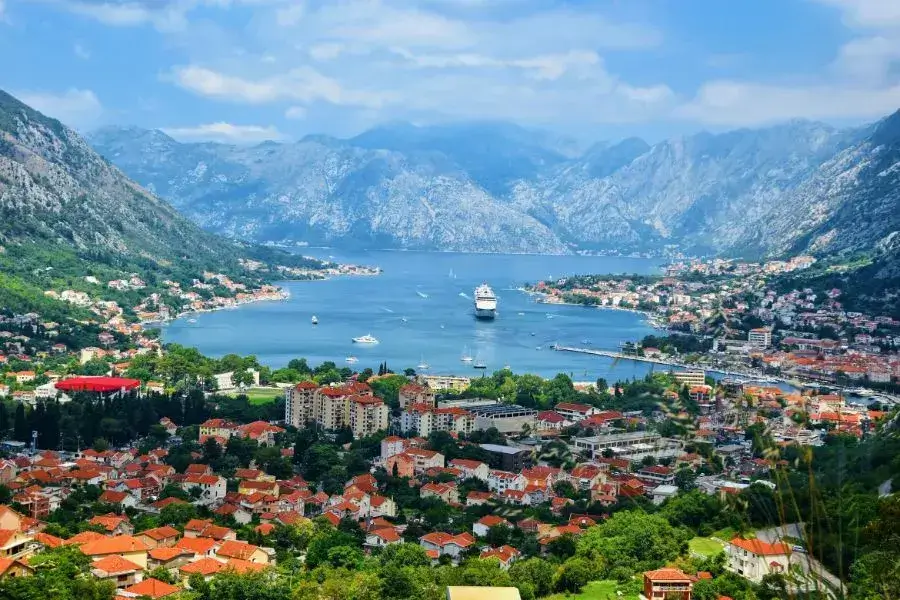
The Classic 2-Week Eastern Europe Itinerary for US Travelers
This route covers three of the region’s most spectacular cities, stays affordable throughout, and can be done on $1,200–$1,880 total including international flights from the East Coast.
Kraków, Poland
Arrive, explore Wawel Castle and Kazimierz on Day 1. Day 2: Auschwitz-Birkenau memorial visit (essential). Days 3–4: Main Market Square, milk bar lunches, Wieliczka Salt Mine, and Kraków’s emerging food scene.
Prague, Czech Republic
Train from Kraków (~8 hours, ~$25). Prague Castle and Charles Bridge on Day 5. Old Town and local pub dinner Day 6. Day 7: Vinohrady neighbourhood walk, Žižkov TV Tower. Day 8: day trip to Český Krumlov.
Budapest, Hungary
Train from Prague (~6 hours, ~$25). Széchenyi thermal bath Day 9. Hungarian Parliament and Chain Bridge Day 10. Ruin bars, Jewish Quarter Day 11. Day 12: Buda side, Fisherman’s Bastion. Day 13: Budapest’s extraordinary food market.
Fly Home
Morning in Budapest, afternoon flight home. Budapest has good connections to major US hubs, often via Amsterdam, Frankfurt, or Vienna. Alternatively, extend the trip by adding Sofia or Belgrade on the tail end.
Eastern Europe vs. Western Europe: What You Actually Pay
The numbers below are mid-range estimates for a solo traveler staying in a 3-star hotel and eating out every meal.
| City | Hotel / Night | Dinner for One | Daily Total | vs. Paris |
|---|---|---|---|---|
| 🇵🇱 Kraków | $40–60 | $8–14 | $50–80 | Save ~60% |
| 🇷🇸 Belgrade | $30–50 | $6–12 | $35–60 | Save ~70% |
| 🇭🇺 Budapest | $45–70 | $10–18 | $55–90 | Save ~55% |
| 🇧🇬 Sofia | $35–60 | $8–14 | $45–75 | Save ~60% |
| 🇨🇿 Prague | $60–90 | $10–18 | $70–110 | Save ~45% |
| 🇫🇷 Paris (reference) | $180–280 | $28–50 | $200–300 | — |
How to Travel Between Eastern European Cities
Intercity Trains
The most scenic and reliable way to move between capitals. Prague to Vienna runs ~$20; Prague to Kraków ~$25; Vienna to Budapest ~$25; Budapest to Kraków ~$55. Book on Trainline or Czech Rail.
FlixBus & RegioJet
Budget bus services connect most Eastern European cities for prices that seem almost too low – $10 for a 4-hour intercity trip is common. Slower than trains but excellent for tight budgets.
Budget Flights
Wizz Air and Ryanair operate throughout Eastern Europe with fares that occasionally dip below $25 one-way. Best for longer-distance hops like Belgrade to Prague or Sofia to Kraków.
Eurail Pass
A regional Eurail pass can save money for travelers hitting four or more countries with multiple train journeys. Do the math before buying – point-to-point tickets are often cheaper for 2–3 city trips.
10 Tips for US Travelers in Eastern Europe
Travelers can make their budget international trip to the Easter Europe successful if they follow the expert strategies. It not only helps in cheaper travel but also ensures you complete your journey without any problems. We have shared the expert tips hereunder.
Use Local Currency – Always
Poland uses the złoty, Hungary the forint, Serbia the dinar, Bulgaria the lev. Only the Czech Republic uses the koruna. None of these are the euro. Always pay in local currency and use ATMs from local banks – airport currency exchange booths charge punishing rates.
Get a Wise or Revolut Card Before You Go
These multi-currency cards give you near-interbank exchange rates with no transaction fees. Essential for US travelers moving between countries with different currencies. Load up before departing.
Book Trains in Advance for Best Prices
Unlike Eastern Europe’s bus network (which is cheap even last-minute), train prices can rise close to departure. Book 2-4 weeks ahead via Trainline, ČD (Czech Railways), or MÁV (Hungarian Rail) for the best fares.
Stay in Local Neighborhoods, Not Tourist Corridors
Prague’s Old Town is beautiful but expensive. Vinohrady and Žižkov are 15-minute walks away and offer better restaurants, lower accommodation costs, and a genuine local atmosphere. Same principle applies in Budapest (skip the Chain Bridge tourist zone, stay in Ferencváros) and Kraków (Kazimierz over Rynek hotels).
Free Walking Tours Are Genuinely Excellent
Every major Eastern European city has high-quality free walking tours (tip-based, typically $10-15). They’re the best 2-hour investment you’ll make on arrival – local guides provide context that no guidebook delivers, and you’ll know which neighborhoods to return to.
Eat Where Locals Eat – Especially at Lunch
Many Central European restaurants offer a “lunch menu” (daily set menu) with soup, main course, and drink for $6–10 – the same kitchen that charges $20 for a la carte dinner. In Poland, milk bars (bar mleczny) offer traditional home cooking at $3–5 per dish.
Visa: Understand ETIAS Before You Travel
US citizens can travel visa-free to EU member states (Czech Republic, Hungary, Poland, Romania, Bulgaria) under the ETIAS authorization system. Serbia and Albania allow US citizens visa-free entry. Always verify current requirements with the respective embassy before booking.
Spring and Early Fall Are the Best Times to Visit
April-June and September-October offer the best weather in Eastern Europe: mild temperatures, manageable crowds, and lower accommodation prices than July-August peak. Prague in May is genuinely one of Europe’s most beautiful travel experiences.
Don’t Try to Do Everything in One Trip
A 2-week trip covering 6 cities leaves you exhausted and gives you surface-level experiences. Pick 2–3 cities and stay 4–5 nights in each. Eastern Europe rewards the traveler who slows down – the neighborhoods, the cafés, the conversations with locals are the experience.
Learn Five Words in the Local Language
Hello, thank you, please, excuse me, and cheers. In Hungarian: szia, köszönöm, kérem, elnézést, egészségedre. In Czech: ahoj, děkuji, prosím, promiňte, na zdraví. In Polish: cześć, dziękuję, proszę, przepraszam, na zdrowie. Locals notice and appreciate the effort – it changes the quality of every interaction.
What is the best time to visit Eastern Europe?
You can explore the amazing landscapes and architectural magnificence of Eastern Europe year round. However, you can experience some activities/ festivities in certain seasons. The summer trip may offer you a better beach atmosphere and so on. The ideal travel season depends on what you want to experience.
Spring (April–June):
Perfect weather, blooming gardens, and fewer crowds.
Summer (June–August):
Best for beaches, festivals, and outdoor adventures, though popular areas can be busy.
Fall (September–October):
A favorite season for many travelers because of pleasant temperatures and beautiful scenery.
Winter (November–February):
Great for Christmas markets, snowy landscapes, and cozy city experiences.
In the End
Eastern Europe offers US travelers a chance to experience Europe beyond the usual tourist routes. Whether you are exploring ancient castles, relaxing by the Adriatic Sea, enjoying local cuisine, or discovering hidden cultural treasures, the region delivers incredible experiences without the crowds and prices of some Western European destinations.
For travelers seeking adventure, authenticity, and unforgettable memories, Eastern Europe deserves a spot on the itinerary.
Eastern Europe Budget Travel FAQs for US Travelers
How cheap is Eastern Europe for US travelers in 2026?
Why is Eastern Europe trending for US travelers in 2026?